Where does concrete provide the most value in a parking or yard area?
Concrete is often most valuable where loads are heavy, vehicles turn or stop, fuel or oils soften asphalt, or repeated repairs interrupt operations. Common locations include truck lanes, loading approaches, bus stops, dumpster pads, entrance aprons, trailer parking, and industrial work zones. A full concrete lot may also suit sites seeking a long service life and defined maintenance plan. The choice should consider initial construction, subgrade, drainage, utilities, traffic, winter maintenance, and how future excavations will be handled. Using one pavement section across every area may overspend in light stalls while underbuilding truck routes. A traffic and use plan allows the designer to create appropriate zones. If weak areas are patched without correcting base or water problems, rutting and settlement can return at the transition. Professional assessment connects pavement type and thickness to actual axle loads and movements. The result is a site plan that invests in concrete where rigidity and durability provide practical operating value.
How do drainage and stormwater features affect concrete pavement?
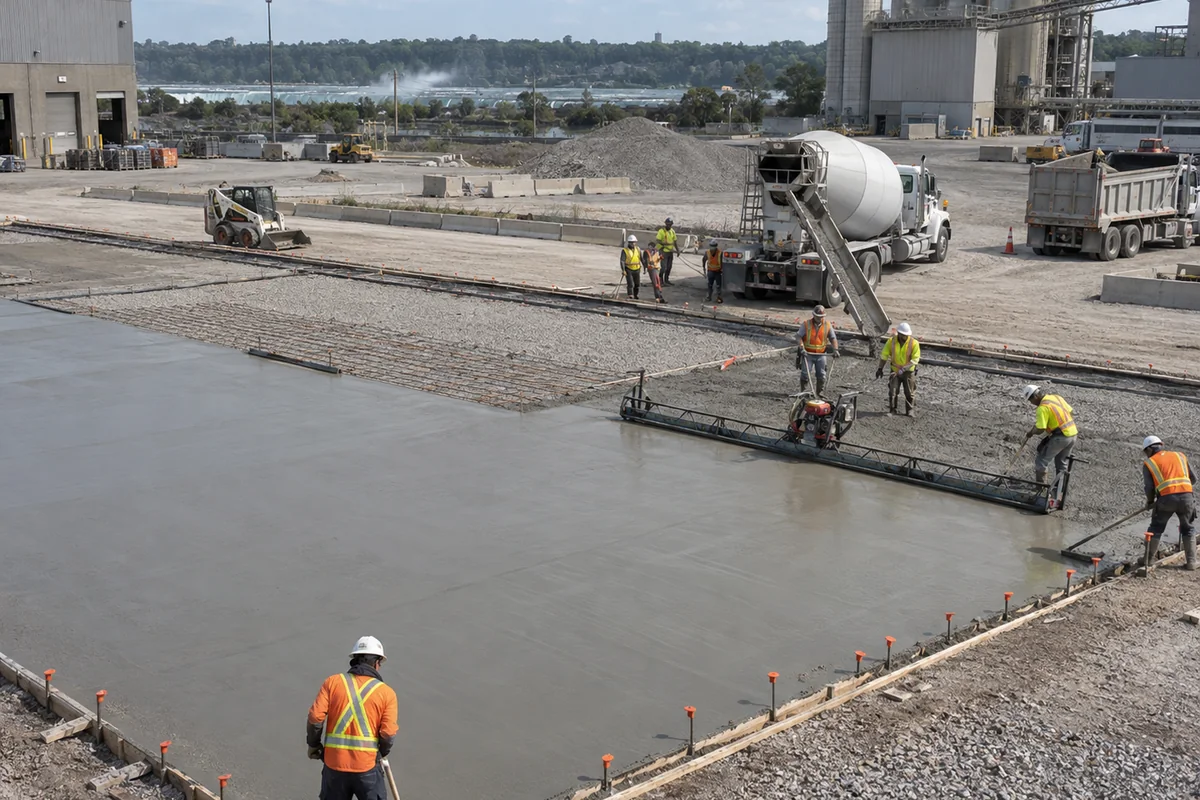
Parking and yard surfaces must carry water toward approved catch basins, swales, or other stormwater features without trapping it against buildings or across accessible routes. Large concrete areas require coordinated elevations because small grade errors can create broad puddles. Water entering joints or reaching a weak base can contribute to pumping, settlement, and freeze-thaw damage. Catch basins, maintenance holes, trench drains, curbs, islands, and adjoining asphalt create fixed points that must match the paving plan. The team should confirm survey control, permitted discharge, and site-plan requirements before forming. During placement, frequent elevation checks and a workable finishing sequence preserve the intended drainage. A late attempt to grind channels or add thin toppings is rarely equal to correct grading. Owners should also keep drains clear and repair failed joint sealants where specified. Sound drainage protects the pavement structure, reduces icy areas, and helps traffic move through the property safely.
Why are panel layout and load transfer important in concrete lots?
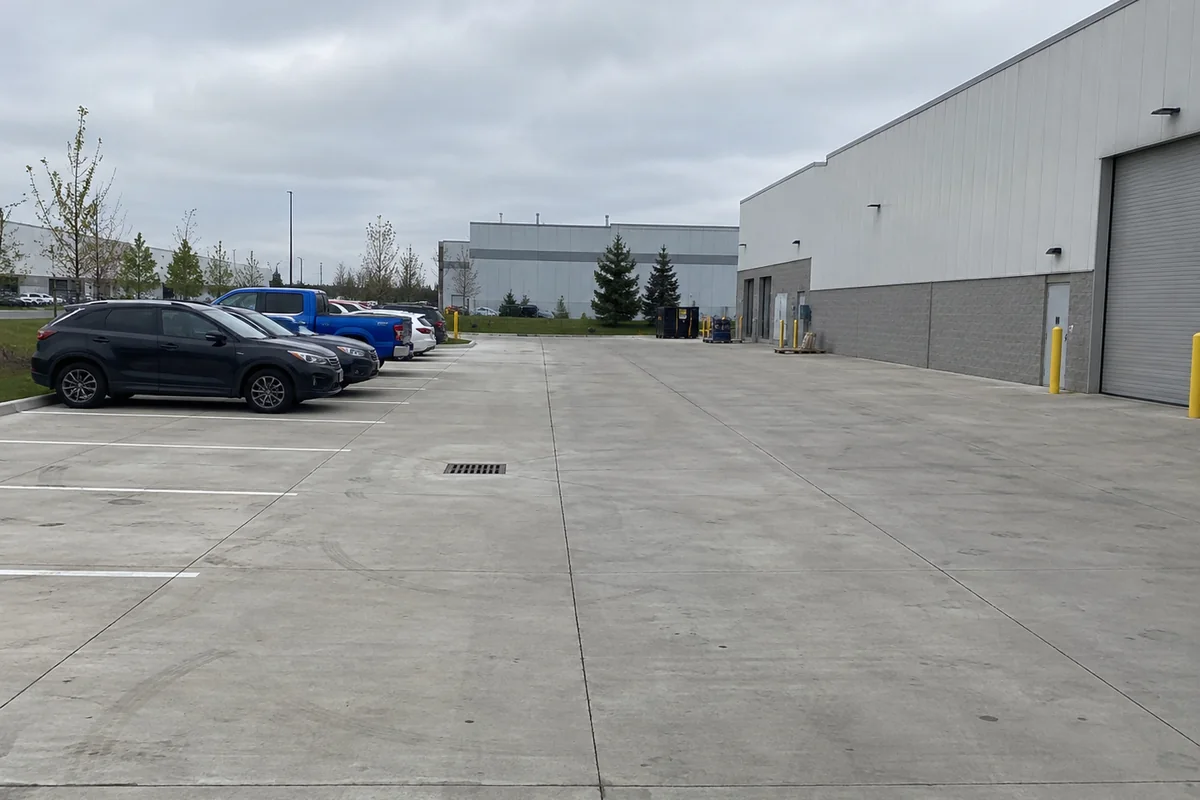
Concrete shrinks as it dries, so parking lots and yards are divided into planned panels. Joint spacing, shape, depth, and timing guide cracks toward predictable lines. Long narrow panels, acute corners, utility covers, islands, and re-entrant geometry increase random-crack risk. Heavy vehicle routes may require dowels or other load-transfer details so one panel edge does not deflect independently of the next. Poor transfer can lead to faulting and edge spalling that snowplows and truck wheels worsen. The joint layout should be drawn with curbs, drains, light bases, and construction phases rather than marked after the pour. Sawing must occur within the appropriate window, and formed joints need straight, stable bulkheads. The owner should know which joints require maintenance and which are intended to move. Correct joint planning will not eliminate all cracks, but it manages normal concrete movement and protects trafficked edges better than irregular panels created by convenience alone.
How are curbs, sidewalks, and accessible routes coordinated with a lot?
Curbs, sidewalks, ramps, and parking surfaces form one circulation system. Their elevations control drainage, vehicle movement, pedestrian separation, and accessible travel. Ramp slopes, cross slopes, landings, curb transitions, detectable elements, and parking-space layout must follow the approved design and current requirements. If curbs are set before final pavement elevations are checked, water can pond or a ramp can miss its intended grade. If sidewalks are isolated from snow storage and drainage planning, winter maintenance may block the route. The concrete sequence should confirm survey control and provide joints where walks meet curbs, buildings, and slabs. Professional layout is especially important because small dimensional errors can make an accessible route non-compliant. Coordinating all site concrete at once reduces mismatched elevations and patches. Owners should provide the latest site plan and identify waste collection, fire routes, delivery paths, and snow operations so the finished site works throughout the year.
How can parking-lot construction limit disruption to customers and tenants?
Parking work can be divided into phases that preserve an entrance, fire route, delivery area, or group of stalls. The phasing plan should show traffic control, pedestrian detours, temporary signage, contractor access, concrete truck routes, cure periods, and the point when each area can reopen. Businesses may schedule high-impact work outside peak seasons, but weather and concrete supply still need realistic allowances. Opening a lane early because parking is tight can damage joints and slab edges before the concrete reaches the required strength. Tenants and customers need simple advance communication rather than changing barricades without explanation. The property manager should identify special events, waste pickup, deliveries, accessible spaces, and emergency requirements. With those facts, the contractor can coordinate demolition, base work, placement, curing, line marking, and handover. A clear phase plan treats continued operation as a project requirement while still protecting the quality of the new pavement.
Discuss your project
Share the location, scope, timing, and any site conditions that may affect the work.